Body Belonging Clinic

Our Story

Why Body Belonging Clinic exists.

A note from the founder

Why Body Belonging Clinic exists

If you've spent a good part of your life feeling like you don't quite fit anywhere, tired in a way that sleep never seems to fix, I want you to know I'm not writing this from somewhere above it. I've sat in that same waiting room, and I've sat in the chair.

I spent most of my life looking for a place where I felt like I belonged, and for a long time I moved through the mental health system first as a patient and later as a professional without ever finding it, because so much of that world reaches for a diagnosis and a script and then decides the work is done. It can feel like a system built around everyone except the person actually sitting in front of it, and even after years of study, once I was finally in a place to advocate, to help make change and to listen, I came up against the very same thing, that almost no one had the time to listen or to go beneath the script and the diagnosis.

Here's the part I hold onto. Your worth was never meant to be measured in blocks of fifty minutes, or handed back to you in a plan that runs out after six visits, and you were never a problem to be moved through a schedule. What most of us are actually missing isn't another referral, it's connection, and a bit of time, and enough safety to feel properly understood, which is where the real work with yourself begins.

I know this because I've lived it. I'm a neurodivergent person who spent years bouncing around the system feeling defeated, until one day somebody finally said the word ADHD to me and something in me could breathe. I'm queer, I'm Aboriginal, and I carried an eating disorder for the better part of a decade that hardly anyone around me understood. For a long time I was managed, not held.

And then I found the one chair that changed everything. My psychologist, Annette, just let me be there. She didn't rush me and she didn't give up on me at the point where every other service already had, and what she gave me was never really a technique, it was connection, and safety, and the plain experience of being held long enough to find my way back. She's a big part of why I'm still here, and she rewrote what I believe a chair can be.

I also know, more than I'd ever wish to, what it costs a person to move through life without being understood, because I lost my best friend to a world that couldn't hold them. I carry that into everything I make, and it's a lot of why I've promised myself this will be a place with room for every single person who walks in, whoever they are and whatever they're carrying.

I carry my family here too. My mum is a survivor of the Stolen Generation, and I want to name plainly the intergenerational trauma that history left behind, because it travels quietly down the line and it is still with me today, carried alongside more than 65,000 years of storylines that are mine to hold as well. I had to make my own way through the same disconnection from culture that was forced on my mother, the same removal, and for the longest time that distance sat right where a whole way of belonging should have been. What I did not expect was that the disconnection would be the very place the finding began, because out of it came connection, back to my culture, back to myself, and back to my own identity, and that is the thing I now hold right at the centre of this clinic. For our mob, healing was never about fixing one person on their own, it grows from connection, to culture and to Country, to family and community and the ones who walked before us, and when those connections are strong they hold us and protect us in a way no single session ever could. It's why I believe being understood has to mean being understood in the whole of who you are and where you come from, and it's why I keep the door open for the ones coming after us, so the storylines we inherit can slowly and gently be rewritten into something kinder.

So I built Body Belonging Clinic. Honestly, it's just the space I spent my whole life looking for and never quite found.

I also didn't want any of this to rest on good feeling alone. Everything I have lived, and everything the research kept confirming, I've shaped into a way of working I call the Body Belonging Model, so there is real structure underneath the warmth. It moves gently, from safety first, to noticing what your body and your feelings are telling you, to steadying yourself in the ways a prescription can't teach, and finally to belonging, because that is where change actually lasts. As an eating disorder clinician and social worker, I've built it to be safe for anyone living with an eating disorder and affirming of every neurodivergent mind, right from the very first step, which matters here more than almost anywhere.

A square peg in a world shaped for someone else

People come to me at every age and stage, usually once things have quietly become too much, and so many of them say a version of the very same thing, that they feel like a square peg trying to fit a world that was clearly made for a rounder one, and that lately life has felt harder for them than it seems to be for everyone else. You're not broken. You never were. You've just got a different kind of brain living in a world built around a different kind of brain, and most of what has gone wrong lives in the gap between the two, not in you. What hardly anyone offers is time, and someone willing to slow right down, listen properly, and treat a different brain as a perfectly ordinary thing, until one day, sometimes for the first time in your life, you feel understood.

I know what it actually feels like

This is a place for anyone, and most of all for you if you've never once felt safe enough to sit down in a chair at all.

I know the days when there's no hunger to be found anywhere, and then it's suddenly eight at night and you're standing in the light of the open fridge. A brain like ours reads the body's quieter signals, hunger and fullness among them, far less clearly, so eating can swing from forgotten all day to all at once by the evening, and honestly, that deserves a bit of kindness rather than any shame.

I know the way your mind switches itself on the moment your head hits the pillow, when the house has finally gone quiet and there's room at last to build the most beautiful plans for tomorrow, and then tomorrow turns up with you already exhausted and every one of those plans slipping through your fingers. You're not lazy. Your body clock genuinely runs late, and settling at night is hard.

And I know the walk to the kitchen for one glass of water that somehow becomes loading the dishwasher, then carrying the tea towels to the machine, then finding yesterday's washing still sitting in there and starting it all again, until you notice you never actually poured the water. That isn't carelessness at all, it's just how hard it is for a brain like ours to hold one thing in mind while the next keeps turning up in front of it.

I see all of it, and I've never once thought of any of it as a character flaw. It's just a different brain doing its best, and it can be worked with gently, from the inside out, rather than fought.

The chair was never meant to stay in one room

For too long, care has been built around one narrow lens, in one room, against one clock, with barely a thought for who you actually are or the different worlds you might be moving through at once, and it's been built against us rather than for us. A chair was never meant to sit still in a single room anyway. It belongs outside and online, in movement and creativity, in joy and laughter and hope, and that's the kind of chair we're building here.

So if you've read this far and something in you has gone quiet and a little bit hopeful, you're already welcome. There's a place here for you, exactly as you are.

Whenever you're ready, and there's no rush at all, you can read a little about the way we work here, or simply reach out, and we'll take the first small step together.

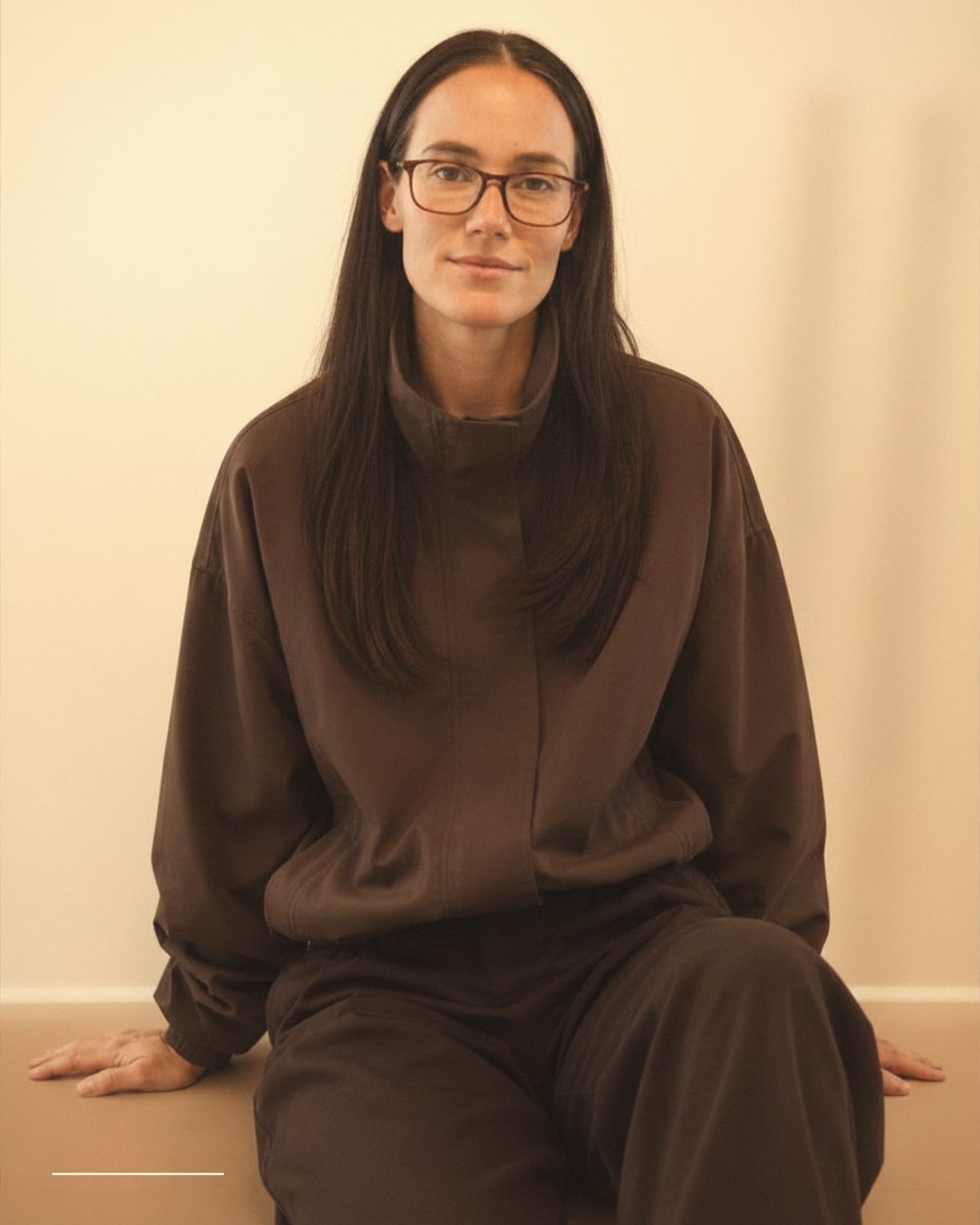
Lauren Lynch, Founder. Accredited Mental Health Social Worker (AMHSW), ANZAED Credentialed Eating Disorder Clinician, and a proud Yorta Yorta woman.

Every body belongs.

You are not a diagnosis, and your worth was never something to be measured in blocks of fifty minutes or handed back to you in a plan that runs out after six visits. There are no broken brains here, only different ones, living in a world that was mostly built for a different shape, and everything we do starts from the belief that connection and safety come before any strategy, because no one has ever really changed while they still felt unseen. Your relationship with food, your feelings, your focus and your body were never separate problems to be sorted one at a time, they're all part of the one story, and it's yours, and it deserves time and a bit of tenderness far more than it deserves shame. Whoever you are and however you got here, whether you're neurodivergent, queer, Aboriginal, in recovery, or just still working yourself out, there's room here for the whole of you.

We've no interest in the kind of care that gets built around one narrow lens and delivered against the clock in a single beige room, because that has quietly been made against us rather than for us, and we don't accept that a person could ever be contained inside a textbook. So we take the time instead, we listen properly, we stay curious, and we keep the chair open in all the places it was always meant to live, outside and online, in movement and creativity, in joy and laughter and hope. If you've never once felt safe enough to sit down in a chair, this is the place that was built for you.

Every body belongs.

Book a free intro call